Discover why Argentina, Bolivia, and Chile form the Lithium Triangle, home to the world’s richest lithium reserves powering EVs and clean energy.
As electric vehicles, renewable energy storage, and smartphones reshape the global economy, one element has quietly become as strategic as oil once was: lithium.
At the heart of this lithium boom lies a remote, high-altitude region of South America known as the Lithium Triangle—formed by Argentina, Bolivia, and Chile. Together, these three countries hold the largest and most concentrated lithium resources on Earth.
But why this region? Why not elsewhere?
The answer lies in a rare combination of geology, climate, and deep time.
The Geography That Changed the Energy Future
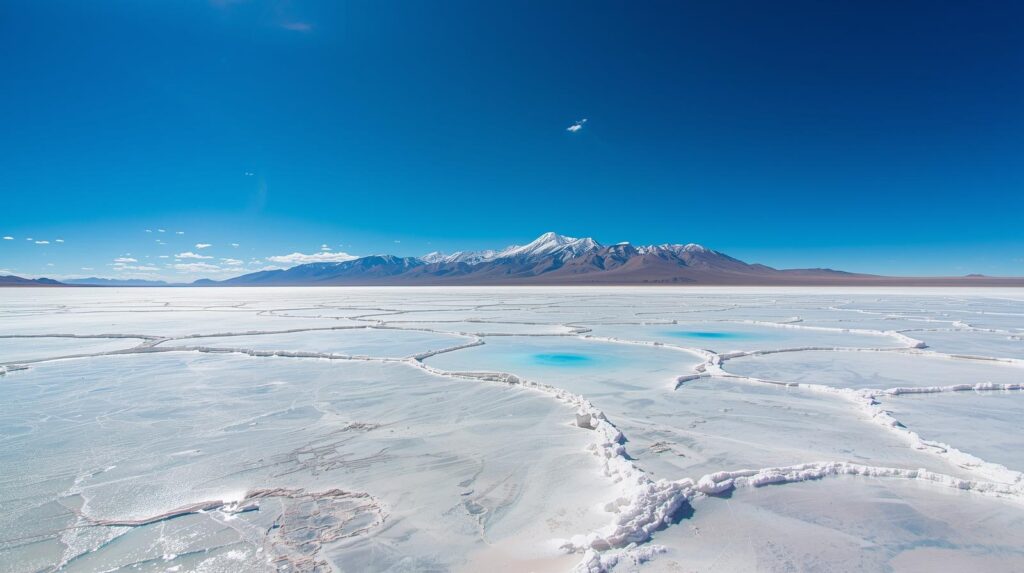
Argentina, Bolivia, and Chile meet along the Andean Altiplano, a vast plateau sitting 3,000–4,500 meters above sea level.
This region has three crucial characteristics:
- Closed basins (water flows in but never flows out)
- Extreme aridity (some of the driest places on Earth)
- Intense solar radiation, causing rapid evaporation
These conditions are not just harsh for life—they are perfect for concentrating lithium.
Ancient Volcanoes: The Original Lithium Source
Millions of years ago, the Andes were shaped by intense volcanic activity.
Volcanic rocks are naturally rich in lithium. Over time:
- Rainwater dissolved lithium and other minerals from volcanic rock
- The water flowed into low-lying basins
- Because the basins had no outlet, the water stayed trapped
As water slowly evaporated over geological timescales, lithium became concentrated in underground salt-rich brines.
The Birth of Lithium-Rich Salt Flats (Salars)
This process created massive salt flats known as salars, beneath which lithium-rich brine is stored.
Some of the world’s most important salars include:
- Salar de Atacama (Chile) – highest lithium concentration globally
- Salar de Uyuni (Bolivia) – the largest salt flat on Earth
- Salar del Hombre Muerto, Olaroz, Cauchari (Argentina) – major producing and upcoming sites
Together, these salars account for around 50–60% of the world’s known lithium resources.
This concentration is unmatched anywhere else on the planet.
Why Brine Lithium Is So Valuable
Lithium is extracted mainly in two ways:
- Hard rock mining (spodumene) – common in Australia
- Brine extraction – dominant in the Lithium Triangle
Brine extraction offers major advantages:
- Lower operating costs
- Less drilling and blasting
- Heavy use of natural solar evaporation instead of energy-intensive processing
In simple terms, nature does much of the work.
Each Country’s Role in the Lithium Triangle
Chile
- World’s highest-grade lithium brine
- Mature mining infrastructure
- Long a global lithium production leader
Argentina
- Dozens of new lithium projects
- Strong foreign investment
- Fastest-growing lithium producer in the region
Bolivia
- Holds the largest lithium resource volume
- Extraction is complex due to chemistry and policy
- Enormous long-term potential
Each country brings a different strength, but together they dominate the global lithium map.
Why the Lithium Triangle Matters Today
Lithium is the backbone of:
- Electric vehicle batteries
- Smartphones and laptops
- Grid-scale renewable energy storage
As countries race toward decarbonization, control over lithium supply has become a matter of economic and geopolitical power.
Final Thought
The Lithium Triangle exists not because of politics or coincidence, but because millions of years of geological history aligned perfectly with modern technological needs.
What was once a remote, inhospitable plateau is now one of the most strategically important regions on Earth—quietly powering the global energy transition.
Leave a Reply